The construction of a new concert hall was approved by Prague City Council Resolution No. 2033 on 29 August 2017 and it will be located in the Vltavská area.
The selection of the site was preceded by an extensive discussion, during which more than 30 locations were discussed from different angles. For example, the sites Letná, Klárov, Lannova, Karlovo náměstí, Palackého náměstí, Smíchov, Libeň, Argentinská, Vltavská, Štvanice, Těšnov, Florenc, Wilsonova, Prague Congress Centre, etc. were proposed.
The Association for the Construction of a New Concert Hall, which first met in 2008 and consisted of Jiří Bělohlávek, Roman Bělor, Martin Gross, Josef Pleskot and Jana Vohralíková, preferred a well-connected location right by the Vltava. Štvanice and Vltavská competed for the top position.
Based on the recommendation of the Coordination Committee for the Construction of a New Concert Hall in Prague, Prague City Council decided to locate the new concert hall at Vltavská in 2017.
The Vltava Philharmonic Hall will become not only a cultural symbol, but also a key accelerator for the development of the Holešovice Bubny-Zátory transformation zone. Its construction, together with the revitalisation of the adjacent area, will begin the transformation of the Vltavská site into a modern urban district that will offer quality housing, civic amenities and new job opportunities.
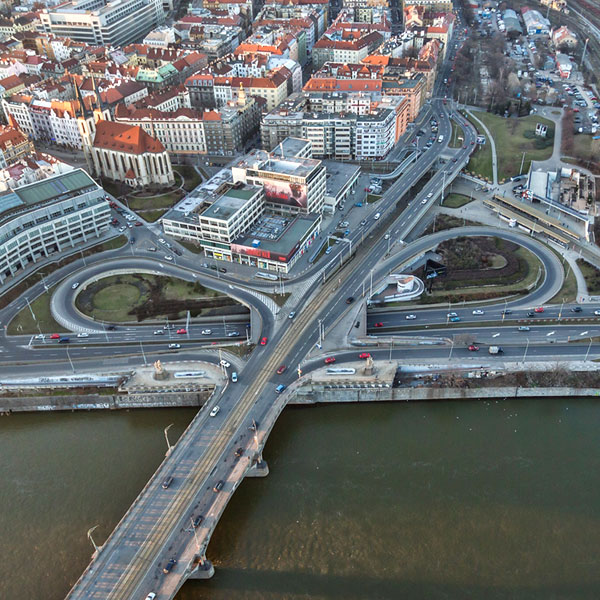
Vltavská is perfectly accessible by public and intercity public transport (metro, trams and trains) and private cars (taxi and individual transport). Further modifications to transport services are part of the comprehensive urban plan.
Among other things, it is planned to put road traffic underground, so that a pleasant square with green space and a promenade along the river can be created in front of the Philharmonic Hall. The railway administrator Správa železnic is preparing to open Prague-Bubny train station and the Vltava waterfront is an ideal location for a river tram stop.

The building site is located a few steps from the river, along which important buildings were historically located (the National Theatre, Academy of Arts, Architecture and Design, Rudolfinum, Faculty of Law, Convent of St Agnes).
The roof terrace and the top floors of the building’s galleries will offer a beautiful view of the Castle and the Prague skyline.
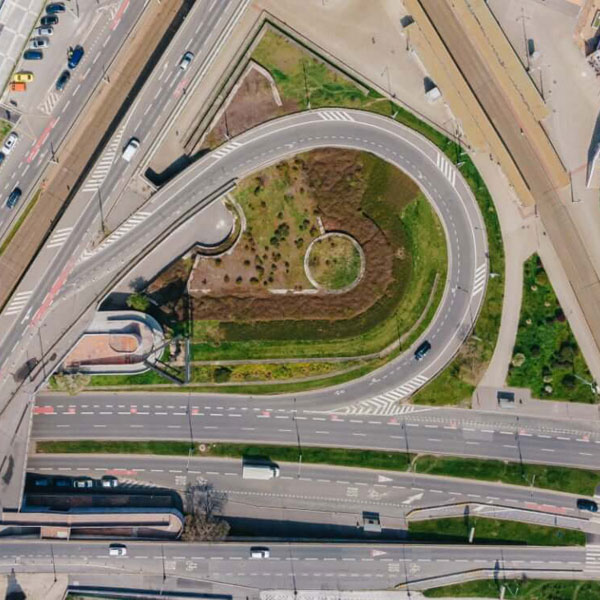
Unfortunately, Vltavská is now only a busy traffic junction in the wider centre of Prague. The new urban plan and the construction of all the necessary infrastructure will unlock the location’s great development potential and start the transformation of the huge Holešovice Bubny-Zátory brownfield site into a new vibrant urban district.