

4 September 2026
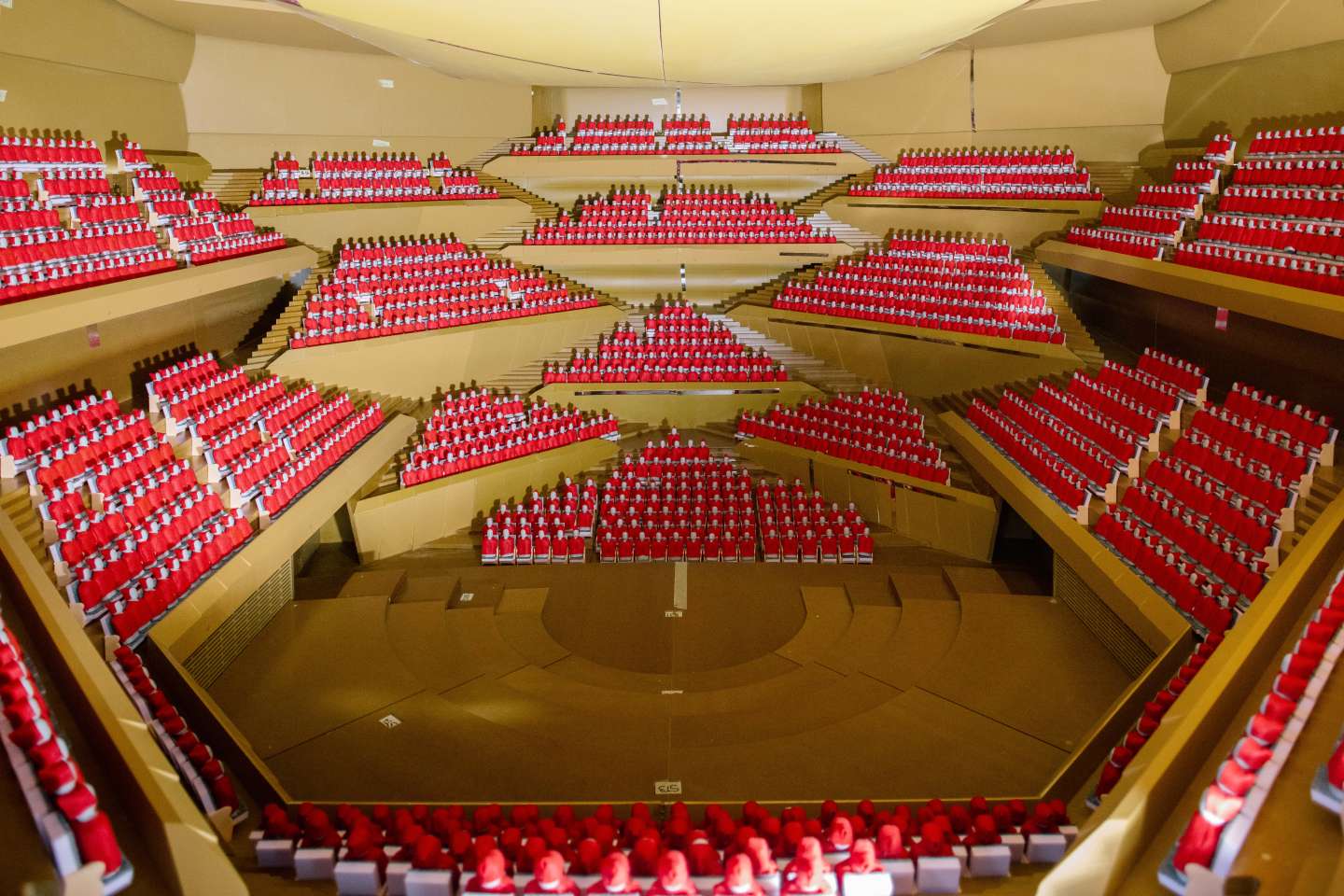
The acoustics of the Main Hall of the Vltava Philharmonic Hall are being tested by the world-renowned Nagata Acoustics using a physical 1:10 scale model. Measuring 4.9 × 5.8 × 2.5 metres, the model was designed and manufactured by the Czech company AVETON according to Nagata Acoustics’ specifications. Reproducing the geometry of the future concert hall with millimetre precision, it allows the acoustic design to be further refined in a physical environment.
The Project Recently Entered the Permitting Process
The Main Hall of the Vltava Philharmonic Hall, with a capacity of 1,800 listeners, is designed primarily for symphonic concerts with natural acoustics and no amplification. The aim is to create a rich yet clear sound in which individual instruments and every nuance can be heard distinctly, while at the same time fostering a sense of intimacy between the audience and the performers. The hall’s acoustics are shaped primarily by the geometry and configuration of the space, together with the choice of materials and their surface finishes. The acoustic design is therefore closely integrated with the architectural design of the hall and is being developed through collaboration between architects, acousticians and other leading international experts. The final design must provide outstanding conditions both for the audience and for the musicians performing in the hall.
“I am looking forward not only to the exceptional acoustics of the concert hall, which are fundamental to us as musicians, but I also find myself increasingly drawn to the Vltava Philharmonic Hall project as a whole, its philosophy and its social dimension. It will offer a new place and a new opportunity for people to meet, engage in dialogue and connect with the international cultural community. In this way, our society can continue to develop humanistic values that are becoming ever more important and irreplaceable, and which are fully aligned with this unique place. Alongside art, social dialogue will therefore also gain its own symbolic space,” says conductor Tomáš Netopil.
Digital Studies Complement Testing on the Physical Model
The physical testing was preceded by computer studies in which acousticians analysed the distribution of sound reflections in space and over time. The results were continuously incorporated into the further development of the design, which is now being followed by verification using the physical model.
“A hall such as the one being created for the Vltava Philharmonic Hall is inherently unique, and the ability to complement the proposed studies carried out in the digital world with acoustic studies in the physical world is a valuable tool for the further development and coordination of the design. The acoustic model will allow us to carry out acoustic measurements with sound in a real physical environment using specialised loudspeakers and microphones. This will enable us to further refine the geometry of the entire space and the material requirements, and to continue supporting the BIG team in delivering an ambitious, world-class concert hall for Prague,” says Marc Quiquerez of Nagata Acoustics.
During the acoustic tests, specialised loudspeakers inside the model generate sound signals that are captured by microphones positioned at different locations throughout the hall. The acousticians observe how sound propagates through the space, when individual reflections arrive and at what intensity, and whether any undesirable acoustic phenomena occur. Reflections can also be examined optically using a laser and mirrored elements.
Measurements on the model are carried out at frequencies ten times higher than those used for measurements in a full-scale concert hall. The model will therefore be hermetically sealed and filled with nitrogen, which reduces the absorption of sound by air at high frequencies. This allows the measurement conditions in the model to correspond as closely as possible to the future acoustic conditions of the hall.

The Model Took Eight Months to Build and Must Reproduce the Hall to Millimetre Precision
The acoustic model was designed and manufactured by the Czech company AVETON at its workshops in Mnichovo Hradiště. Its preparation and production took a total of eight months and involved a team of 15 people. Most of the model is made from compressed wood-based material and other wood-based materials, while 3D printing was used for the most geometrically complex elements. Exceptional demands are also placed on the surface finish of the individual components, which must be perfectly smooth and reflective at frequencies of up to 40 kHz.
“Although it is a scale model, it has to reproduce the geometry of the actual hall with exceptional precision. Deviations are therefore measured in millimetres. Accuracy is crucial to the results of the testing, because every change in shape or surface affects the way sound is reflected and propagates through the space,” says Jan Antoš, acoustic model designer at AVETON.
The model also takes into account the presence of the future audience, which affects the acoustic properties of the space. The Main Hall of the Vltava Philharmonic Hall is designed for 1,800 listeners, and the model therefore contains approximately 1,750 figures made from extruded polystyrene, complete with “hair” and clothing that simulate the acoustic absorption of the human body and make it possible to reproduce the conditions of a full auditorium. Some seats are left vacant to accommodate the microphones used during measurements.
Materials Play an Important Role
Virtually every surface in the Main Hall influences its final acoustics, making the choice of materials an integral part of the acoustic design. Specific requirements also apply to the seating, which helps reduce the difference between the acoustic conditions of a full and an empty hall. BIG therefore closely coordinates the interior material design with Nagata Acoustics.

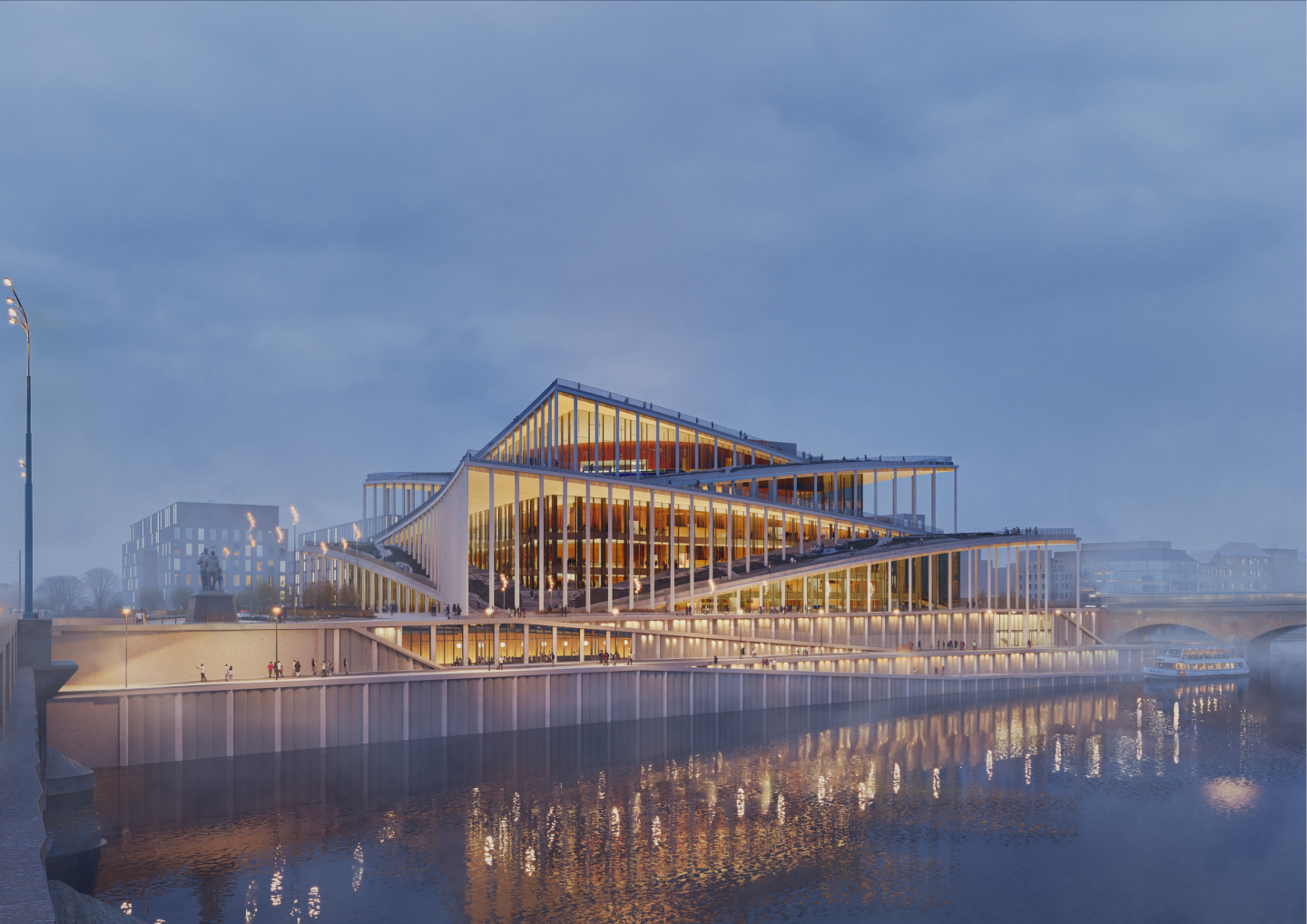
Materials are also one of the defining elements of the architectural concept for the Vltava Philharmonic Hall as a whole. In selecting them, Bjarke Ingels and the BIG team draw inspiration from the Czech landscape, the Vltava River, the tradition of Czech craftsmanship and music. These sources of inspiration are reflected not only in the choice of individual materials, but also in the way they are processed and in the role they play within the architectural and acoustic design of the building.
“Over the past four years, we have developed the initial ideas from the architectural competition for the Vltava Philharmonic Hall into a fully resolved design that is becoming increasingly tangible. By submitting the application for the project permit, we have taken an important step towards turning our vision into reality. Today, we already have a tangible sense of what the future philharmonic hall will look like, how it will feel and, above all, how it will sound. The large-scale acoustic model of the Main Hall is a construction in its own right and gives the acousticians highly precise feedback that allows us to continue fine-tuning a space that is almost a musical instrument in itself.
For the surfaces of the Main Hall, we developed the idea of using timber from Czech forests. The organic irregularity of the wood provides the diffusion of sound that was historically achieved through architectural ornament. Here, instead, the natural character of the material itself performs that acoustic function. For the Chamber Hall, we worked directly with quarries on how the stone should be split so that its natural texture and veining would create a similar organic diffusion of sound. Here too, ornament is replaced by the authentic properties of the material itself.
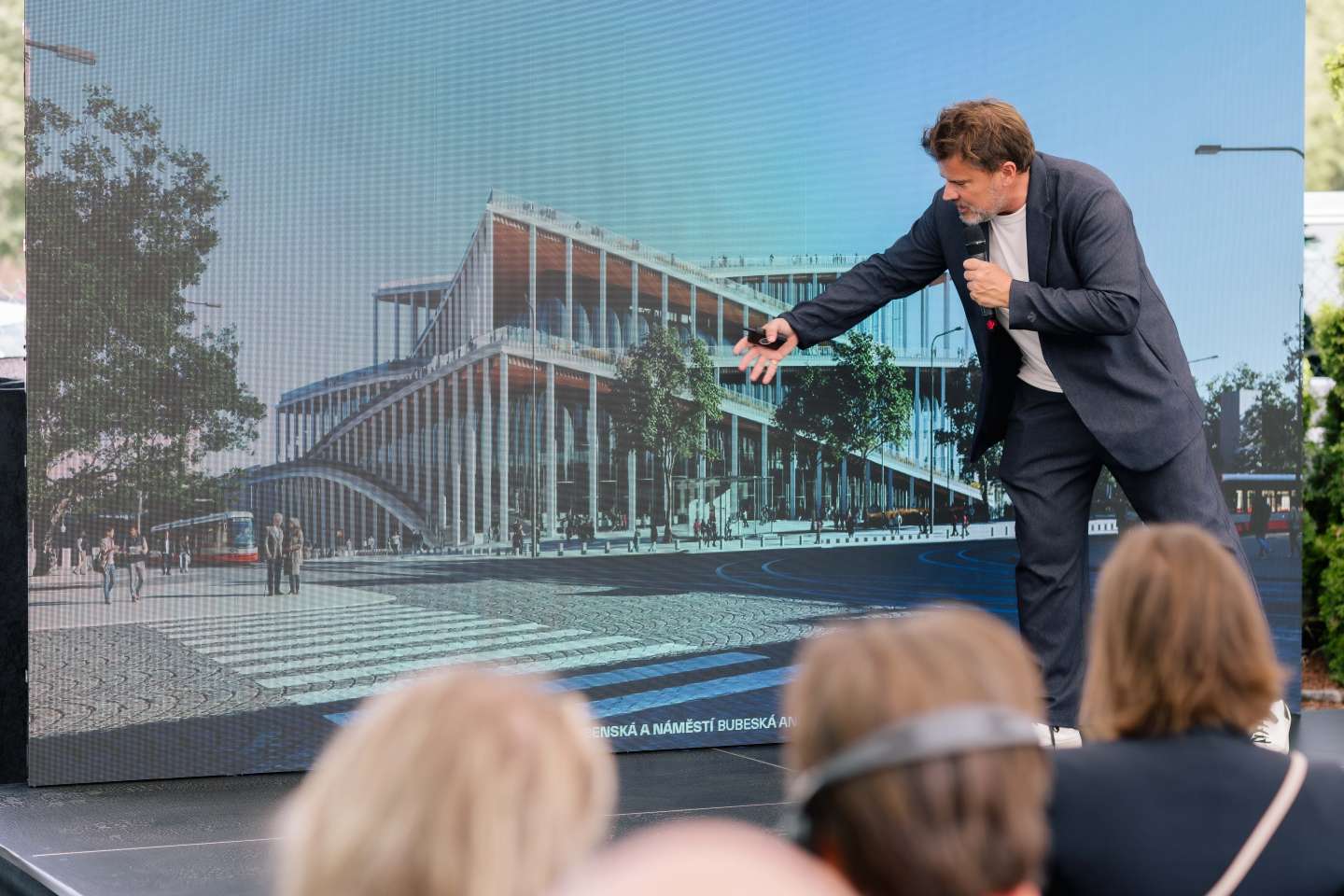
All of the halls and their supporting spaces are concentrated within a glazed volume that forms the backdrop to the generous foyer. Working with cast-glass manufacturers, we have arrived at a very promising material: amber-coloured cast glass that refers to significant examples of cast glass in modern Czech architecture. Its depth, texture and translucency will create a lively and dynamic backdrop to the foyer. These full-scale 1:1 samples, acoustic models and material studies give us increasing confidence that something truly exceptional is taking shape here.
I am immensely pleased that, on this extensive and exceptionally inspiring shared journey with the leadership of the Vltava Philharmonic Hall project, we are now entering another crucial phase. And more than ever before, I am looking forward to the moment when we begin construction – and ultimately sit down in the Main Hall and hear the first concert performed there,” says Bjarke Ingels, founder and creative director of BIG.
Photos: Jan Malý